
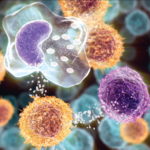
Co-evolutionary development of the immune system together with infections and non-infectious environmental proteins (allergens) has generated biologically relevant thresholds and major directions to be taken by the immune system. The default healthy immune response to allergens is expected to be no response, however, detectable T cell and antibody (particularly IgG4 and IgG1) response has been demonstrated in sensitized, but clinically healthy individuals. If an immune response develops in healthy individuals, the immune system shows allergen-specific tolerance by using multiple mechanisms in order to keep the intensity of the inflammation low and tissue destruction small.
Prof Cezmi Akdis describes the concept of keep away, wash away, regulate and suppress in relation to mucosal barriers involved in respiration in the delightful summary found in SciTopics