
BioMask BF-200. Mimics Mucosal Cells Then Minerals Kill the H1N1 Virus

BioMask on ArenThe influenza virus is a determined and relentless foe. Infecting about 1 billion people worldwide annually and killing hundreds of thousands. If influenza evolves into a pandemic strain, as it did three times last century, it could kill tens of millions.

Stripped to its genetic skeleton the virus that has wrought havoc on populations and caused untold misery is one of the simplest organisms on the planet. It consists of merely eight genes. Humans, on the other hand, have some 20,000 genes.

According to experts, in the first eight weeks of a flu pandemic, an effective mask could reduce the number of cases from one million to just 6. [1]

Read the rest of this page »

Children and Anti-Virals. Are They Worth Combining?

untitled BMJ LogoComment: A paper out in the British Medical Journal on the 10th August 2009 [1] raises some interesting questions about the benefit of treating children under the age of 12 with neuraminidase inhibitors. This paper looked at 4 RCT’s involving 1766 children of whom 1243 had confirmed seasonal influenza A. Plus three RCT’s for the potential benefits of prophylaxis in 863 children.

Read the rest of this page »

Mechanisms of Viral Defence, Infection and Recovery

A Virus is an ultramicroscopic infectious agent.

The H1N1 A 2009 (Swine Flu)  is a novel strain of the influenza virus.

Viruses cannot reproduce on  their own. To reproduce, a virus must bind to a living cell inside some organism, insert its genetic material into that “host” cell, and take over the cell’s reproductive “machinery.” The virus then makes copies of itself – maybe hundreds of thousands. Sooner or later, this kills the infected cell – causing the virus to leave the cell and cause illness. Once out of the host cell new viruses start the process over, attacking other cells until the immune system, and or medication controls their activity and replication. The H1N1 Influenza A virus once inside a cell can produce approximately 100,000 new virions in about 8 hours.

Read the rest of this page »

Evidence Based Nutritional Strategies For Optimal Mucosal Health

The World Health Organisation declared the first flu pandemic in 41 years on 11 June. As details of the global impact of the 2009 influenza A (H1N1) virus — and efforts to combat the threat — continues to unfold, Nutri-Link Clinical Education provides evidence based nutritional strategies for optimising the mucosal barrier of prevention.

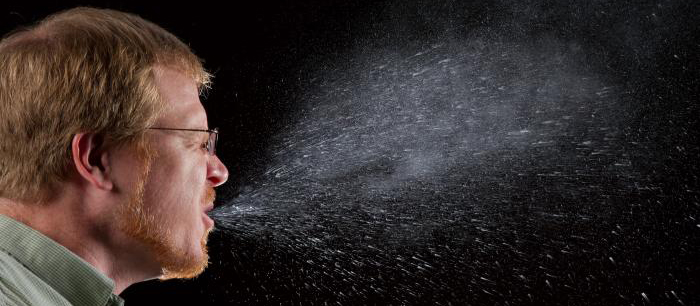
man sneezing

Read the rest of this page »

Flu Pandemic Underway

Margaret Chan, the director-general of the World Health Organization (WHO), has officially declared the first global influenza pandemic in 41 years, for the A(H1N1) virus. “The world is now at the start of the 2009 pandemic,” she said. That makes it the fourth flu pandemic in a century, after 1918, 1957 and 1968. “The scientific criteria for a pandemic have been met,” she said; on 11 June the WHO moved to the topmost of its pandemic threat scale, phase 6, which indicates sustained community-level outbreaks in two or more countries in one other WHO region beyond initial community spread in one WHO region. “Further spread is considered inevitable,” she said.

Read the rest of this page »