Can Bacteria Make You Smarter?
The potential cognitive gains linked to the role of gastrointestinal bacteria continues to attract international interest. The scientific community are becoming entranced with the notion that our bacterial exposure affects not only the local tissues, but also others including the brain.
Exposure to specific bacteria in the environment, already believed to have antidepressant qualities, could increase learning behaviour. Mice fed live cultures of Mycobacterium vaccae were able to learn and complete a maze twice as fast as control mice were the key comments delivered at the 110th General Meeting of the American Society for Microbiology last week.
Mycobacterium vaccae is a natural soil bacterium which people likely ingest or breath in when they spend time in nature,” says Dorothy Matthews of The Sage Colleges in Troy, New York, who conducted the research with her colleague Susan Jenks.
Leaky Gut & Food Reactivity – What’s the Mechanism?
Michael Ash looks at leaky gut with a contemporary approach to investigation, relevance and restoration. It is quite clear that in order to extract nutrients and other sentinel information carrying agents the barrier that divides the contents of the gastric lumen from the host must be permeable. The question that has interested clinicians for many years is – when is it too permeable and what does that mean in terms of health and illness.
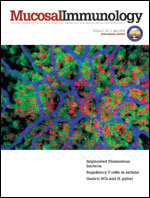
A paper in the March edition of Mucosal Immunology explores this concept in some detail and delivers some much needed information and potential direction in terms of dietary management and risk.[1]
Read the rest of this page »
Resveratrol Adds Another Benefit
Ulcerative colitis is a nonspecific inflammatory disorder characterised by oxidative and nitrosative stress, leucocyte infiltration and upregulation of inflammatory mediators. Resveratrol is a polyphenolic compound found in grapes and wine, with multiple pharmacological actions, mainly anti-inflammatory, antioxidant, antitumour and immunomodulatory activities.
Inflammatory bowel disease is a recognised as a chronic pathology by uncontrolled inflammation of the intestinal mucosa which can affect part of the gastrointestinal tract, with causes including genetic factors, immune deregulation, barrier dysfunction, and a loss of immune tolerance toward the enteric flora.
Read the rest of this page »
Could a ‘Bacterial Thali’ Resolve Inflammation? – A Novel Strategy
Michael Ash BSc(Hons) DO, ND, DipION reviews the possibility that strategically selected foods and food concentrates represent a valid therapy for inflammatory illnesses.
There is substantive interest in the potential translation from bench to bedside of simple safe strategies to modify the adverse effects of inflammation. Approaching from a preventative and restorative angle the numbers of papers being published on the role of orally ingested bacteria (probiotics) and in this article – the herb Tumeric (active ingredient of which is curcumin) is presenting increasingly supportive evidence for their reasonable and safe clinical use.
Modern analytical techniques are helping to reveal novel opportunities for inflammation control in the gut and the systemic tissues in new ways that even a few years ago would have been thought of as very alternative!
Read the rest of this page »
Antibiotics Can Cause Gut Related Diseases
Michael Ash BSc (Hons), DO, ND FDipION reviews the current understanding of the role of antibiotics in the initiation of gut associated inflammation and local and systemic health problems, and briefly explores some strategies to prevent and manage this.
What is perhaps the greatest medicinal discovery in the last 100 years has a sting in its tail, the tremendous success in managing bacterial infection has encouraged over and inappropriate use of antibiotics, the problems of which have been well documented. This review explores the developing comprehension that even a single day of antibiotic use has consequences that may produce transient and long term effects that compromise the health and well being of the patient and their bacterial co-habitants.
Sir Alexander Fleming discovered the antibiotic substance penicillin in 1928 and was awarded a co share in the Nobel Prize in Medicine in 1945.
It was a discovery that would change the course of history. The active ingredient in that mould, which Fleming named penicillin, turned out to be an infection-fighting agent of enormous potency. When it was finally recognised for what it was—the most efficacious life-saving drug in the world—penicillin would alter forever the treatment of bacterial infections. By the middle of the century, Fleming’s discovery had spawned a huge pharmaceutical industry, churning out synthetic penicillin’s that would conquer some of mankind’s most ancient scourges, including syphilis, gangrene and tuberculosis. (Time Magazine April 1999)
However, as the combined benefits of decent engineering for sanitation, prevention via vaccination and bacterial infection control through antibiotics have contributed to life extension, they have also produced microbe and human disturbances. The incidence of immune mediated disorders is continuing to increase and the gastrointestinal tract is continuing to gain traction as a site of significant origination.[1],[2]
Read the rest of this page »
Apples and Nuts Reduce Inflammation Via Mucosal Immune System
In the context of the ever increasing relationship between inflammation and diseases of our western lifestyle the idea that the old adage of ‘an apple a day keeps the Dr away’ this recent paper has some attractive evidence.
The university of Illinois team of researcher have written a paper due to be published in the prestigious Journal Brain Behaviour and Immunity later in the year around May.[1]
Looking at a mouse model – and we are aware of how diet affect mouse studies from a post written a few days ago- Food Choice Affects Lab Outcomes this group have extended the concept further, and presented the mice with a specially enriched diet. This study fed a low fat diet to both groups for six weeks differentiated by one having soluble fibre and the other non soluble fibre.
When challenged using a microbial wall particle called lipopolysaccharide (LPS) the group on the soluble fibre had a 50% reduction in symptoms compared to the insoluble group. They also recovered 50% faster. It seems that just 6 weeks of an increased soluble fibre intake change their immune responses in a very positive manner.
Read the rest of this page »
Gluten May be Causing Your Brain Problems!
An interesting paper published in the Sept 2008 Annals of Neurology described a ‘new to science’ brain aggravating enzyme, triggered by reactivity to gluten, but acting independently of other coeliac symptoms.[1]
Most clinicians understand that overt gluten reactivity is classified under coeliac disease and the the classic constellation of symptoms and signs characterising malabsorptive syndrome is a readily recognised manifestation of coeliac disease. Frank malabsorptive symptoms include steatorrhea, weight loss or failure to thrive, bloating, and flatulence, with multiple deficiency states. More common but more difficult to recognise, however, are the other diverse ways in which coeliac disease presents.
Coeliac disease may also mimic many common clinical entities. These atypical modes of presentation include deficiencies of single micronutrients; nonspecific gastrointestinal complaints such as bloating, abdominal pain, diarrhoea, constipation, flatulence, secondary lactose intolerance, and dyspepsia; and non-gastrointestinal complaints such as fatigue, depression, arthralgia, milk intolerance, osteomalacia or osteoporosis, and iron deficiency anaemia.
Read the rest of this page »
Gut Immune Defect Links Bacteria and Metabolic Syndrome
The connection between gut bacteria and obesity has gained some weight, with new findings demonstrating links in mice among immune-system malfunction, bacterial imbalance and increased appetite.[1]
Mice with altered immune systems developed metabolic disorders and were prone to overeating. When microbes from their stomachs were transplanted into other mice, they also become obese. These latest findings add weight to the growing appreciation about the role of the bacteria in and on our bodies. We are all outnumbered in terms of human versus bacterial cells and the concept of human and bacteria symbiosis as a super-organism is gaining traction.
Already there have been strong associations between asthma, some cancers, autoimmune conditions and unwanted weight gain.
Read the rest of this page »
Gut Bacteria May Make You Fat
Obesity: A consequence of adverse inflammation & microbial disruption?
By Michael Ash BSc(Hons) DO, ND, FDipION
Published in CAM 2005
Overweight and obesity are serious, chronic medical condition associated with a wide range of debilitating and life threatening and economically burdensome conditions. The recent and extensive increases in obesity among Europeans are eroding many recent health gains.
Paradoxically the economically wealthier communities of the world continue to over consume food and food products, whilst other nation communities still suffer from food deprivation and starvation, due in the main to drought, floods, ‘acts of God’, corruption and conflict. Approximately 9.5% of the global burden of disease is currently attributable to being underweight,[1] whilst there are now hundreds of millions of people (>500) in developed and developing countries that are overweight or obese. This condition of excessive weight is now so common that it is rapidly replacing malnutrition and infectious diseases as the most significant cause of ill health[2]. An escalating global epidemic of overweight and obesity – “globesity” – is taking over many parts of the world.
Read the rest of this page »
Disease Incidence Prevention by Serum 25(OH)D Level
In the last few years a considerable consensus across the scientific community has begun to emerge concerning the fat soluble nutrient Vitamin D.
Vitamin D is unique – unlike ALL other vitamins very little comes from our food. Almost all of our Vitamin D is produced by the upper surface of our skin during direct exposure to UV radiation in strong sunlight. However in the UK and most of the USA the sun is too low in the sky from November until March to produce any Vitamin D from sunlight exposure. The fat soluble nutrient supplies are meant to rely on a summer exposure to increase our stores to supply what we need during the winter.
Read the rest of this page »