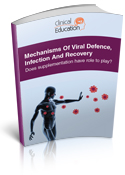
Mechanisms of Viral Defence, Infection and Recovery
A Virus is an ultramicroscopic infectious agent.
The H1N1 A 2009 (Swine Flu) is a novel strain of the influenza virus.
Viruses cannot reproduce on their own. To reproduce, a virus must bind to a living cell inside some organism, insert its genetic material into that “host” cell, and take over the cell’s reproductive “machinery.” The virus then makes copies of itself – maybe hundreds of thousands. Sooner or later, this kills the infected cell – causing the virus to leave the cell and cause illness. Once out of the host cell new viruses start the process over, attacking other cells until the immune system, and or medication controls their activity and replication. The H1N1 Influenza A virus once inside a cell can produce approximately 100,000 new virions in about 8 hours.
Read the rest of this page »

The immune system is prone to the same grave misfortunes as any defense system handling weapons: collateral damage that comes with the destruction of the enemy on one’s own territory and friendly fire due to mistaken identity. Whereas the collateral damage is the price we pay for clearance of infections, autoimmunity is a pathological process. Nevertheless, the effector mechanisms involved in both processes are the same. Whether environment can be a cause, a trigger or an amplifier of an autoimmune disease are questions that are being intensively investigated.