Herbal Adaptogens For Asthma and Adrenal Function
A Blend of Unique Herbs May Have Wide Clinical Application
Read the rest of this page »
In 2006 a landmark study from the Mt. Sinai School of Medicine in New York, the Weifang Asthma Hospital and the Weifang School of Medicine in China reported on a novel blend of Chinese herbs (named ASHMI) that proved statistically as effective as steroids in alleviating asthma symptoms. Now we report more fully on these unique adaptogenic herbs, which may have far wider application than asthma alone. There were preliminary indications that this formula may in fact restore adrenal function, and thus be useful in relationship to many chronic illnesses associated with adrenal fatigue. Highlights of the new information we include in this article:
Enjoyed this article?
Pain Killers Adversely Inhibit Vaccination Benefits
Read the rest of this page »
The questions concerning the benefits Vs risks of vaccination in light of the recent global approach to H1N1 (novel influenza) vaccine recommendations has thrown this area of medicine under a very bright spotlight. Leaving aside the question ‘to vaccinate or not’ a recent article has raised a simple and useful question. If I take a non steroidal pain killer (NSAID’s) to reduce post vaccine discomfort, or are ingesting them for other reasons does it affect my vaccine promoted immune response?
Enjoyed this article?
LGG (Culturelle) Resolves Bloating and Distension
Functional gastrointestinal disorders, a group of functional conditions characterised by the presence of symptoms attributable to the mid or lower gastrointestinal tract, include functional abdominal bloating, which is dominated by a feeling of abdominal fullness or bloating without sufficient criteria for another functional gastrointestinal disorder.
Diagnostic criteria are the presence, for at least 12 weeks, that need not be consecutive, in the preceding 12 months of;
- A feeling of abdominal fullness, bloating, or visible distension; and
- Insufficient criteria for a diagnosis of functional dyspepsia, IBS, or other functional disorders.[1]
Read the rest of this page »
Enjoyed this article?
Blastocystis hominis. Is It Really A Problem?

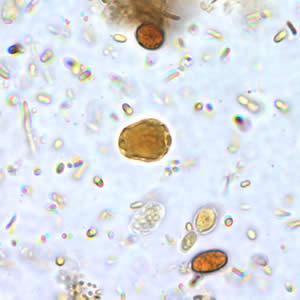
Blastocystis hominis cyst-like forms in a wet mount stained in iodine
Problem?
Michael Ash BSc DO ND FDipION reviews the latest studies on this pathogen.
Blastocystis is an unusual enteric protozoan parasite of humans and many animals. It has a worldwide distribution and is often the most commonly isolated organism in parasitological surveys. The parasite has been described since the early 1900s, but only in the last decade or so have there been significant advances in the understanding of Blastocystis biology.
Read the rest of this page »
Enjoyed this article?
Are Sea Vegetables the Cure for the Iodine Deficiency Epidemic?
Iodine deficiency epidemic
Although most of us believe we are not deficient in iodine since the fortification of salt with iodine, the fact is most people are deficient and don’t know it. Due to changes in food intake, eating patterns and food production methods, iodine intake has been decreasing in the U.S. since the early 70′s. Even worse, we are exposed to increasing levels of environmental toxins that either block the absorption of iodine or block its actions in the body.
Author: Joseph Pizzorno, ND Source: Vitamin Retailer Magazine, November 2009
Read the rest of this page »
Enjoyed this article?
Vitamin D: Summary Papers To Provide Relevant Clinical Update
A summary of 6 papers exploring the various relationships discovered between Vit D status, health and disease risk.
Vitamin D Supplementation Improves Glycmic Control in Diabetes
Regular dosing of vitamin D (2000 IU/day) in early childhood has been shown to reduce the risk of developing Type 1 diabetes (up to an 80% reduction projected over the next 30 years),
Read the rest of this page »
Enjoyed this article?
Lactobacillus GG: A Potent Immune Regulator Effective in Many Disorders
New Research Reveals Probiotic’s Anti-Toxin, Anti-Inflammatory, Immune Boosting Properties
Lactobacillus GG is the most prolifically researched probiotic in the world—over 400 studies have been published that document its remarkable immune-modulating properties.This unique immunobiotic was isolated from a healthy human in 1985 by a team of two Tufts University researchers,Barry Goldin, M.S., Ph.D. and Sherwood L. Gorbach, M.D. They spent nearly a decade testing organisms until they discovered one that was a potent antimicrobial, survived stomach and bile acid, and was very, very sticky—it adhered well to the gut mucosa.
Read the rest of this page »
Enjoyed this article?
LGG (Culturelle) Its Workings Are Explained
Valio’s Lactobacillus rhamnosus GG (LGG®) is the most frequently studied and used probiotic. Under the supervision of researchers at the Institute of Biotechnology, and the Department of Basic Veterinary Sciences at the University of Helsinki, an international research team determined the genome sequences of LGG and a bacterium closely related to it. The results, published in the renowned PNAS journal, shed light on the origin of probiotic mechanisms.
Many research publications have confirmed that bacteria promote health and support immune systems and improve digestion. Some probiotics can also alleviate the symptoms suffered by those with irritable bowel syndrome. As many as every fifth westerner suffers from this pain, also called spastic colon. Studies say that LGG probiotics are also an effective treatment method for reducing children’s atopic symptoms, and the risk of respiratory infections.
Read the rest of this page »
Enjoyed this article?
Iodine Deficiency Or Excess What Is The State Of Understanding?
Dr Miller an American Surgeon reviews the current state of iodine related health problems from a predominately American perspective. He does summarises in his review, published in issue 75 of the UK journal Caduceus a substantive set of opinions and research that brings the importance of iodine and supplementation back into the clinic.
Used extensively until the mid 1900′s iodine has largely fallen out of medical favour and remains a controversial nutrient. Dr Miller elegantly describes the transition from ubiquitous therapy to supplement pariah and the extensive data collected from over 12,000 patients that indicate its therapeutic value.
Read the rest of this page »
Enjoyed this article?
Lifestyle Choices Impact Positively on Second Breast Cancer Risk
Breast cancer survivors might be able to reduce their risk for contralateral breast cancer by making lifestyle modifications. A new study published online September 8 in the Journal of Clinical Oncology has found that obesity, alcohol use, and smoking all significantly increase the risk for second primary invasive contralateral breast cancer among breast cancer survivors.
Researchers from the Fred Hutchinson Cancer Research Center in Seattle, Washington, found that obese women had a 50% increased risk for contralateral breast cancer, and those who consumed 7 or more alcoholic drinks per week had a 90% increased risk. Survivors who currently smoked had a 120% increased risk of developing a second breast cancer.
Read the rest of this page »